Post 24 جريدة الكترونية

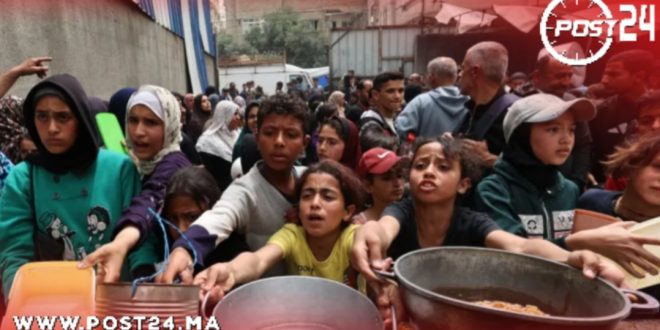
After 22 months of war and a tightened blockade, the Gaza Strip has officially entered a state of famine, according to the United Nations’ Integrated Food Security Phase Classification (IPC). This marks the first time famine has been declared in the Middle East, underscoring the severity of Gaza’s humanitarian crisis.
More than 500,000 people in Gaza are currently living under famine-level conditions, with projections indicating that number could rise to 641,000 by September 2025, international agencies report. Among the most vulnerable are 132,000 children under the age of five facing imminent risk of death from acute malnutrition—a figure that has doubled in recent months.
Rising Death Toll from Starvation
The Ministry of Health in Gaza confirmed that at least 251 people, including 108 children, have died from starvation as of mid-August. Since the imposition of the latest blockade on March 2, 2025, hunger-related causes have killed 57 children.
Additional data reveals:
Over 320,000 children are now at risk of acute malnutrition.
Child malnutrition rates in Gaza City have doubled in two months, reaching 16.5%.
More than 20,000 malnourished children have been hospitalized, including 3,000 in critical condition.
Since July 17, at least 16 more children under five have died of starvation.
Looking ahead, humanitarian agencies warn that 71,000 children and 17,000 mothers face life-threatening malnutrition in the coming months if aid does not arrive.
International Outcry
UN Secretary-General António Guterres condemned the situation as “a man-made disaster, a moral indictment, and a failure of humanity itself.”
Norwegian Foreign Minister Espen Barth Eide described conditions in Gaza as “worse than hell on Earth,” accusing Israeli forces of blocking humanitarian aid and targeting civilians attempting to collect food.
Amnesty International has also charged Israel with deliberately using starvation as a weapon of war—an act it says amounts to genocide and violates international law.
Calls for Urgent Action
Despite repeated appeals, humanitarian aid deliveries continue to be obstructed, leaving Gaza’s population with few options. For many civilians, daily survival now depends on scarce supplies of bread and water.
Humanitarian organizations are urging:
An immediate ceasefire,
Unhindered access for aid deliveries, and
Greater international accountability to prevent further civilian deaths.
As the siege continues, the people of Gaza face what rights groups describe as a slow-motion death sentence, with the most basic human right—the right to food—systematically denied.